Deciding What Is Remembered
I have managed to reduce the memories of two lives to two plastic boxes.
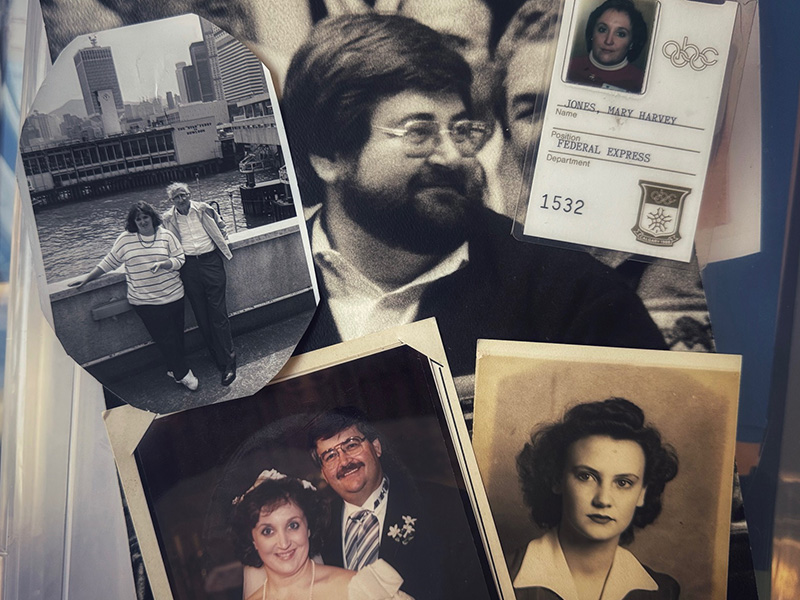
Not the important parts, just the paper evidence that we were here. Photographs. Newspaper clippings. Notes that once felt too meaningful to throw away. The boxes are clear, stackable, and snap shut without hesitation, unaware of the lifetimes they hold.
This project had been waiting for me for about twenty-five years.
My husband kept everything. Receipts, programs, articles, letters. I kept the tubs hidden away and told myself I would deal with them at some point, which is the lie we tell ourselves when we are busy living and not ready for memory.
Apparently, the time was January.
What I was doing that day was not cleaning. It was deciding how two lives would be remembered.
I was not sorting things. I was sorting meaning. The question I kept asking was simple: Is this something future generations would need to know about our lives, or is it something only we would recognize? That distinction did most of the work.
I wanted my family to see a clear picture of who we were, not a scavenger hunt through campaign buttons, name tags, and unexplained artifacts. I wanted them to understand what mattered to us and what we contributed, not just what we accumulated.
I started at ten in the morning and worked until eight that night. I stayed with photographs and papers and the quiet accumulation of years. When an image mattered, I wrote notes directly on it. Who it was. Where we were. Why did it stay? Context felt like a kindness.
There was a third box as well. Historical family photographs gathered for our ancestry records. Without context, images become puzzles. With care, they become history.
I began with his life. Receipts, articles, programs. Evidence of attention paid. Interests held. I found articles about his work and newspaper clippings he had saved. No date. No explanation. Just proof that something had caught his eye once. I kept it, labeled, and moved on.
Then I turned to my own. College papers I once believed were excellent. Photos from jobs I barely remember—a thank-you note from someone whose name I cannot place. I was not trying to preserve everything. I was trying to leave behind a coherent story of what mattered.
It is remarkable how much life fits into a small number of boxes when you separate what mattered from what merely accumulated. Interesting is not the same as important, and memory is not the same as legacy.
Now some questions for you. Where are the memories of your life and those you loved? Are they scattered throughout the house? Will your family know what or where that photograph was about? If you do nothing this year but get everything into one plastic box, that will be an accomplishment.
Some things were let go because they no longer served a purpose. Others because they were never meant to be inherited. Not everything deserves an audience, and not everything needs to survive to be remembered.
I’m not going to lie to you, the process was emotional. It brought up memories, joys, and regrets. The work was precise and clarifying. And unfinished in the way important work often is. One box will need a bit more organizing, and I am grateful I noticed what still required care. Among those pieces was an opinion essay my father wrote in the late 1940s about taxation and economic growth. I am grateful it was not lost before it could be understood.
This was not about erasing the past. It was about shaping it with care so that the people who come after us inherit clarity rather than confusion.
This is my story of deciding how our life stories will be remembered. Only you can choose how to remember yours. Let me hear how you want to share with the next generation.