
Joie de Vivre, Joy of Life: Lessons from Ann
For eight years, I lived next door to the most wonderful woman, Ann. She was the kind of neighbor who could turn a ten-minute check-in into a two-hour conversation and make you laugh before you made it back to the house. One of the reasons I was excited to move into this community was that Ann lived next door.
Ann embodied what the French call joie de vivre, the simple joy of being alive. She smoked incessantly, refused to watch the news, and played bridge as often as she could. She kept a small circle of friends but welcomed new ones easily. At 82, she and I even learned how to play mahjong. Our games were slow and full of mistakes, but she celebrated every winning tile as if we had just solved a great mystery.
Her door was always open except when Ole Miss or an SEC team was playing football. It was best to drop off lunch and quietly leave.
Ann died while I was out of town. It was not unexpected. She was already in hospice when I left. Still, I wondered what it would feel like to come home and not walk next door for one of our long conversations.
Her sons live out of town, so over the years, I helped keep an eye on her. We had a simple system. If the morning newspaper was still in the driveway at 11:00, I would call. If she didn’t answer by noon, I walked inside. More than once, I found her sick and needed to call for help.
Ann was also the most stubborn woman I had ever known. Getting her to a doctor sometimes required an act of God, a call to her son, and his arrival as soon as he could get here.
Our routines quietly intertwined. When I placed a grocery order, I added a standing list for her: lemon pound cake, mini–Diet Cokes, Community Coffee K-Cups, hazelnut creamer, and Lay’s potato chips. Occasionally, cigarettes, although she never wanted anyone to pick them for her. At the end of every month, we settled up. It was never about the money. It was about her keeping her independence.
I liked to cook, and she liked to eat. She faithfully sampled my experiments and honestly told me which ones were flops. We split countless meals. Crawfish. Fried chicken wings from Superlo. Two chocolate donuts from Gibson’s. A litany of Memphis staples. Neither of us could eat a full portion, so sharing worked perfectly. In her last months, when her appetite faded, I found myself scanning menus with one question: what might she actually eat? A few bites of something she loved counted as a victory.
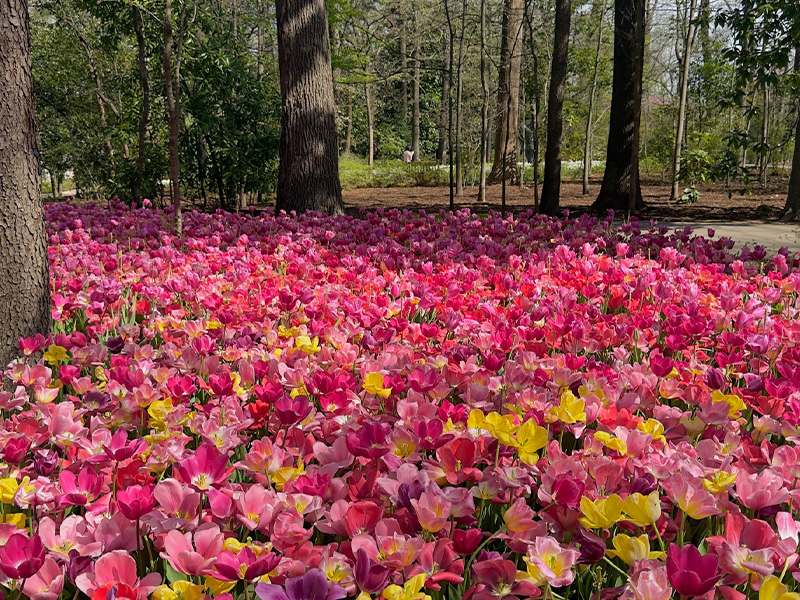
Ann also let me garden on her property. She had never grown a thing in her life, but soon she was picking cherry tomatoes and cutting zinnias. One year, she saw a P. Allen Smith video about planting tulips deep in a pot with pansies on top. I created pots for us with our favorite flower colors. After that, she happily told everyone I was installing the garden according to her instructions.
During a recent ice storm, three of us neighbors checked on her constantly. Nancy, Lydia, and I knew when she finally left on a stretcher that she would not be coming home.
Ann often said she had lived a long and wonderful life and was ready whenever the time came. She lived as independently as possible to the very end. She was my aging hero.
She may have been ready. Those of us who loved her were not.
The house next door is now being prepared for sale. Someone new will move in. That is how neighborhoods work. But our little cove will never feel quite the same.
Ann, the pink tulips are coming up and are beautiful. I am so sad you aren’t here to see them, and if the morning paper ever sits too long, I suspect I will still notice.
Who is the Ann in your life? I don’t know who needs coffee, donuts, and tulips in your life today, but you do. Gibson’s is open.